Unlocking ULTRA Endurance: The Power of Steady-State Riding and Motor Control in Cycling Training and Racing
I recently was looking at training data from several athletes who participated in this year’s Race Across the East, a 630-mile point-to-point race along the RAAM course. In this year’s edition, Kevin Liberacki, an athlete I work with, wins overall, with the second-place finisher professional ULTRA cyclist and coach Giovanni Prosperi finishing 10hrs behind.
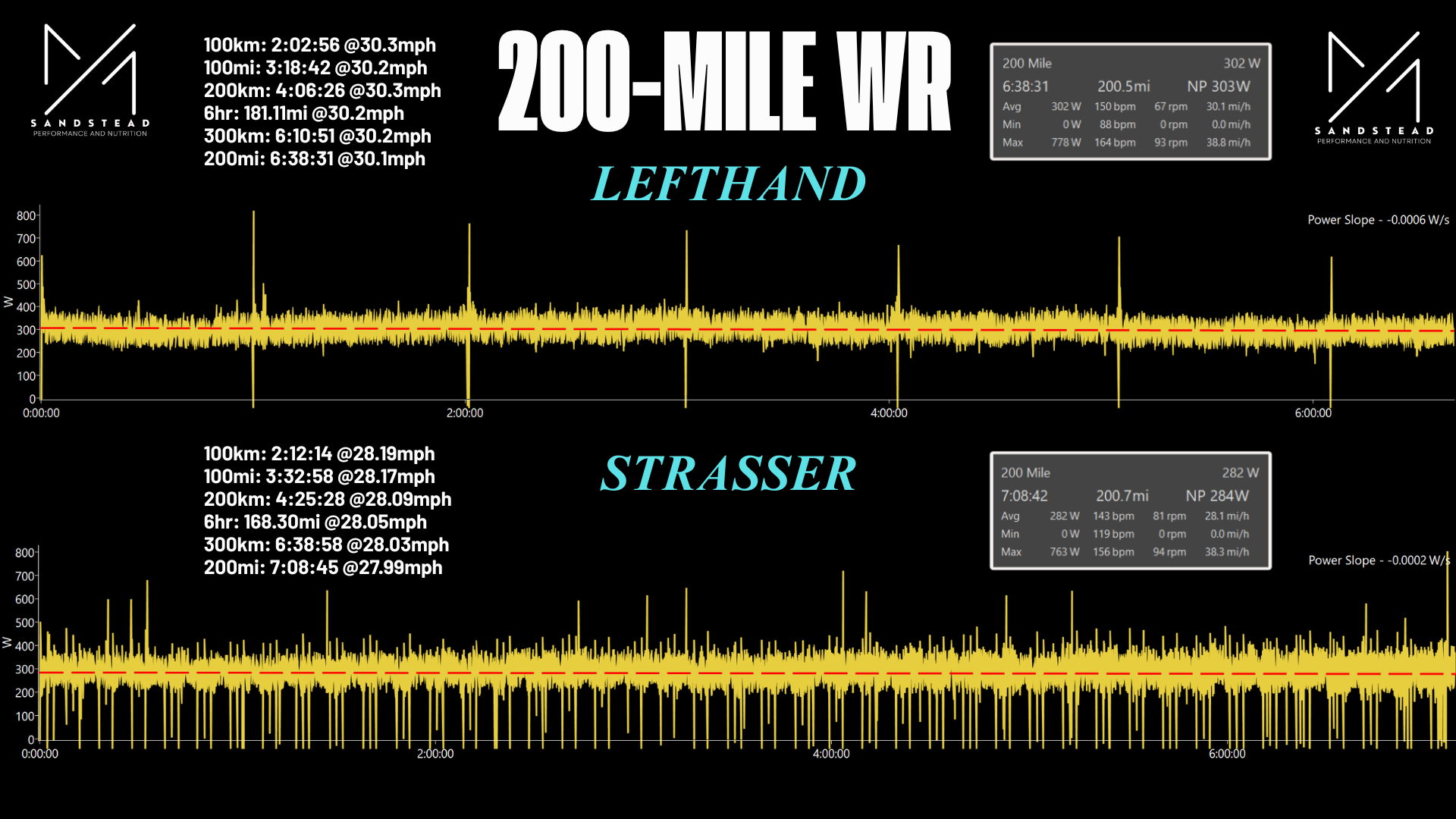
One thing that I noticed from the many participants that I looked at is that in their training data, I couldn’t find examples of steady-state work. In Kevin’s data, we can find hundreds of hours of quality steady-state work, but not from his competitors.
Whether you're prepping for RAAM, Sebring, or a gravel ultra, prioritizing steady-state work can transform your physiology. Let's explore why, including key TrainingPeaks metrics and key physiological adaptations.
What Is Steady-State Riding?
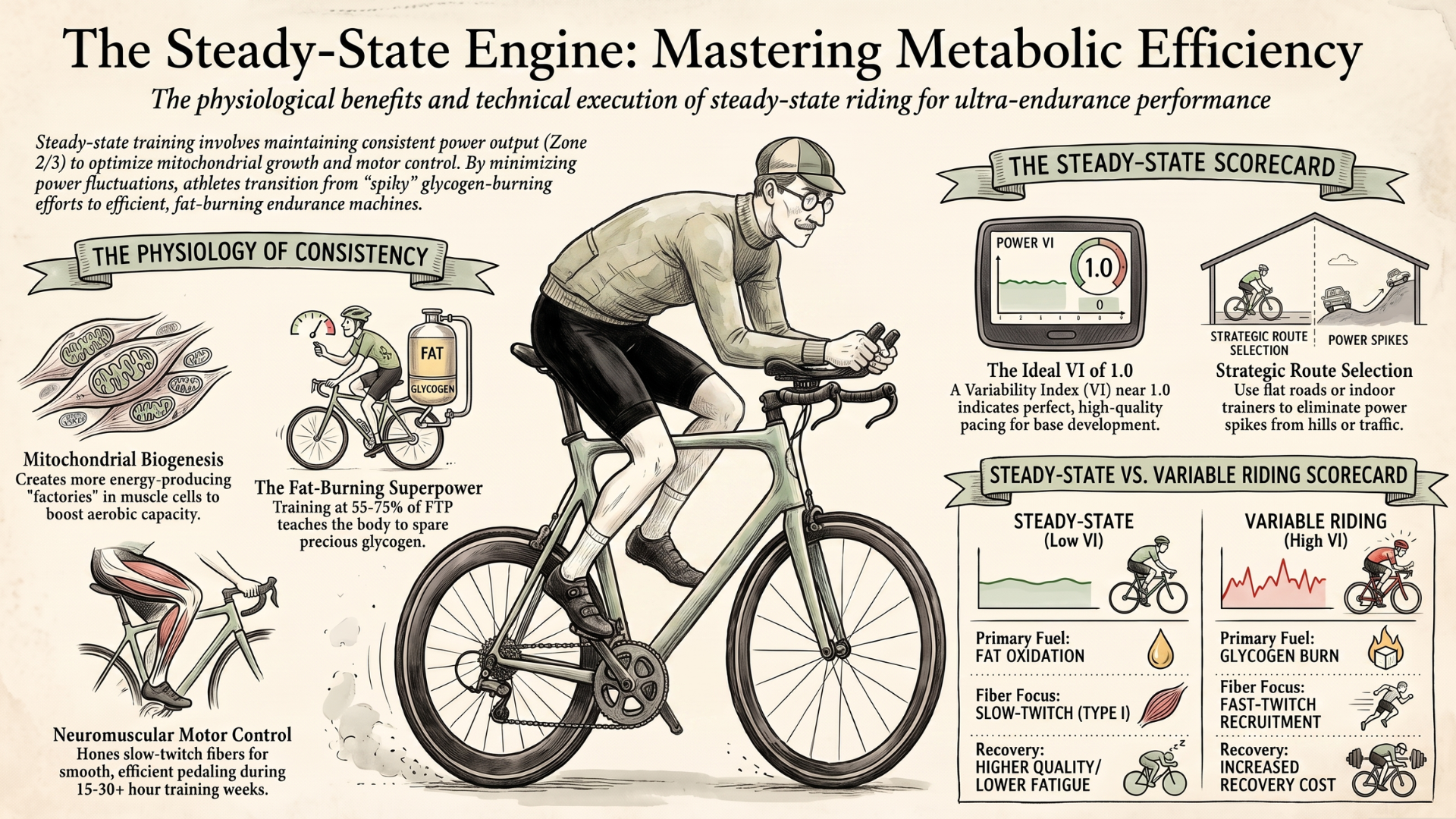
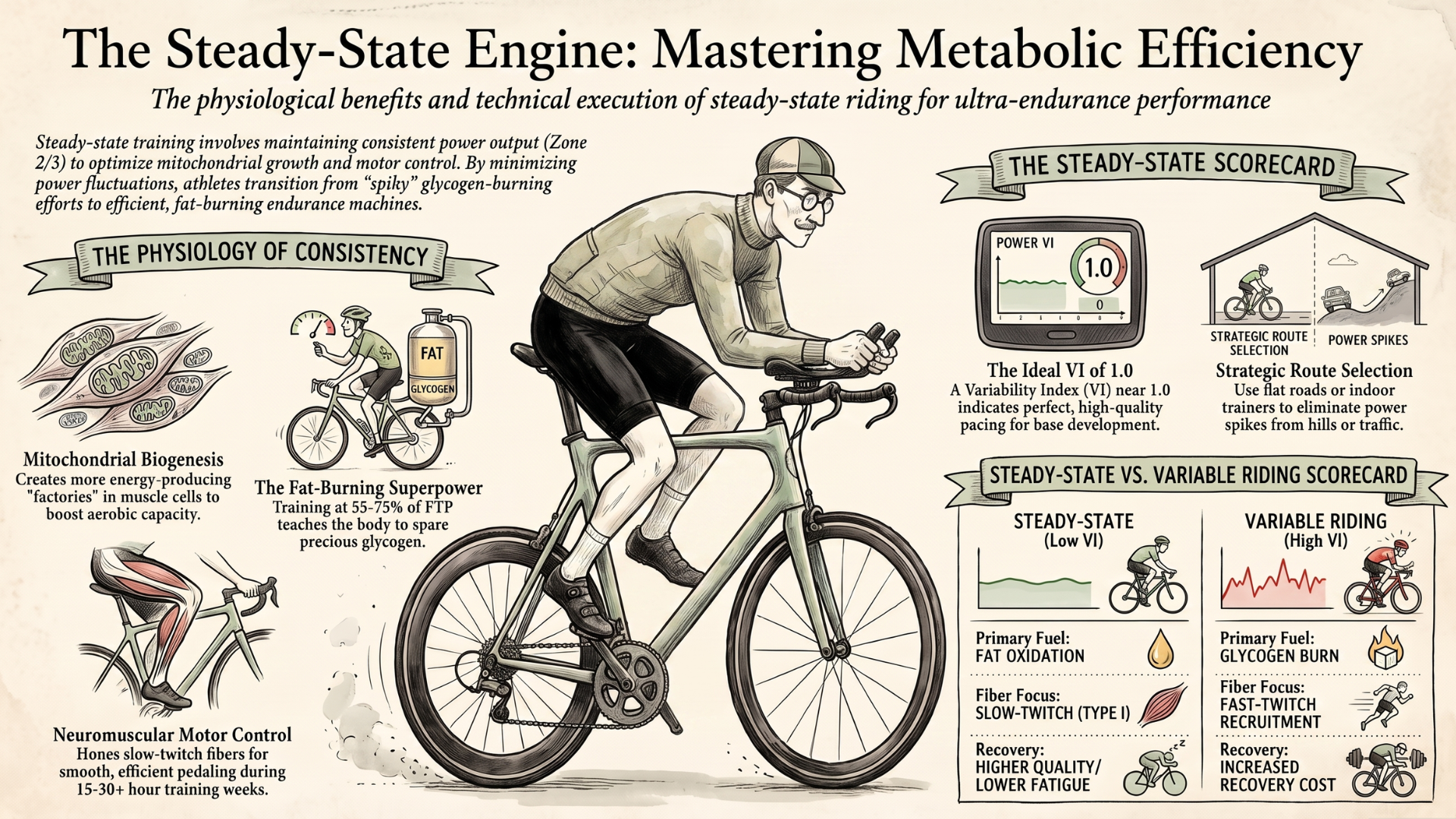
Steady-state riding involves maintaining a consistent effort—typically in Zone 2 or low Zone 3—over extended periods with minimal power fluctuations. This builds exceptional motor control: the neuromuscular coordination required to pedal smoothly and efficiently for hours. Unlike spiky efforts that recruit fast-twitch fibers, steady riding hones your slow-twitch (Type I) muscle fibers, which excel at sustained aerobic work.
The TrainingPeaks VI Metric: Your Steady-State Scorecard
TrainingPeaks' Variability Index (VI) quantifies how steady your ride is. VI is calculated as Normalized Power (NP) divided by Average Power (AP). A VI close to 1.0 indicates highly steady pacing with minimal surges—ideal for endurance adaptations. Rides with VI >1.05-1.10 introduce more variability, which can be useful for race specificity but less optimal for pure base building.
Physiological Gold: Mitochondria and Fat Burning
Steady-state training is a powerhouse for mitochondrial biogenesis—the process of creating more energy-producing factories in your muscle cells. Enhanced mitochondria improve aerobic capacity, allowing you to process oxygen and fuel more efficiently. This directly boosts your fat-burning ability, sparing precious glycogen stores during long efforts.
By training at intensities where fat oxidation is maximized (often around 55-75% of FTP), you teach your body to rely on abundant fat reserves rather than limited carbs. This is crucial for ultra-events where hitting the wall means game over. Consistent Zone 2 work elevates capillary density, improves lactate clearance, and strengthens slow-twitch fiber efficiency—delivering "free" endurance gains without excessive fatigue.
Maximizing Steady-State with Smart Route Selection and Trainer Work
Route selection and trainer sessions are game-changers for hitting low-VI targets. On the road, choose flatter or gently rolling routes that let you lock into a sustainable cadence and power without constant climbing or braking. In Virginia’s mountainous terrain, this might mean out-and-back loops on smoother valley roads rather than punchy climbs that spike power and disrupt motor control.
Indoor trainers shine here. Using a setup like the JetBlack Victory with TrainingPeaks Virtual allows precise power targets, eliminating variables like wind, traffic, or hills. You can program extended steady efforts with perfect consistency, maximizing mitochondrial stress and fat oxidation in every session. This controlled environment is especially valuable during winter, bad weather, or high-volume blocks, ensuring quality aerobic work while protecting recovery. Note: turn ERG off and remove all environmental physics from the session, including feeling any hills. Just spin and grin.
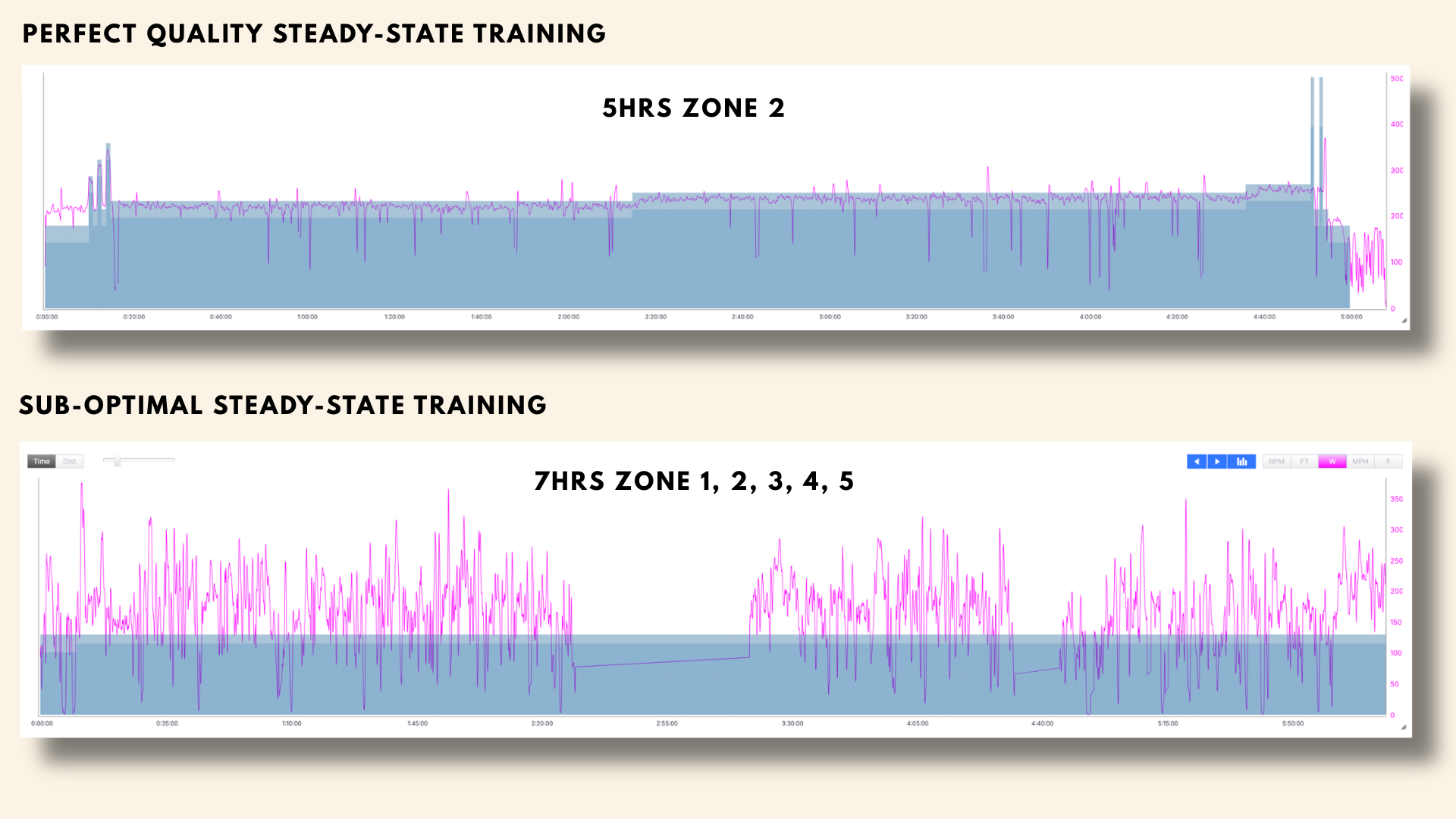
Both athletes had a total of five hours ride time. Who has better training for an ULTRA event? Both are outdoor workouts.
Workout Comparison: Steady vs. Variable
The top outdoor ride shows a classic steady-state masterpiece. Power remains remarkably flat across nearly 5 hours in the blue shaded band with minimal spikes—low VI, superior motor control, and optimal aerobic stimulus.
The bottom outdoor ride is highly variable with frequent peaks and valleys. Higher VI means less efficient pacing, greater glycogen burn, and reduced mitochondrial/fat-burning benefits compared to the steady ride.
For ultra-cyclists targeting 15-30+ hours weekly, the steady-state example wins for foundation and race-pace development. It delivers higher quality work while preserving recovery.
Implementing Steady-State Success
Aim for 70-80% of your weekly volume as steady rides. Track VI, focus on nasal breathing, and fuel smartly for rides over two hours (60-90g carbs/hour).
Steady-state riding isn’t glamorous, but it builds the engine that wins ultras. Master motor control, grow your mitochondria, and unlock fat-burning superpowers. Your future PRs—and podiums—will thank you.

template stuff
Training for the Race Across America (RAAM) is an epic journey. Discover how 2nd-overall finisher (2025) prepared for one of the most grueling ultra-endurance events in the world, requiring intense qualifications and unparalleled teamwork. From 24-hour races to the Race Across the East, see how dedication and strategic planning are key to success. Read about the emotional and rewarding experience of coaching an athlete toward achieving monumental goals.