
Matthew Lefthand’s Colorado Ultra Cycling Records: 200-Mile Data vs. Strasser’s 24-Hour World Record
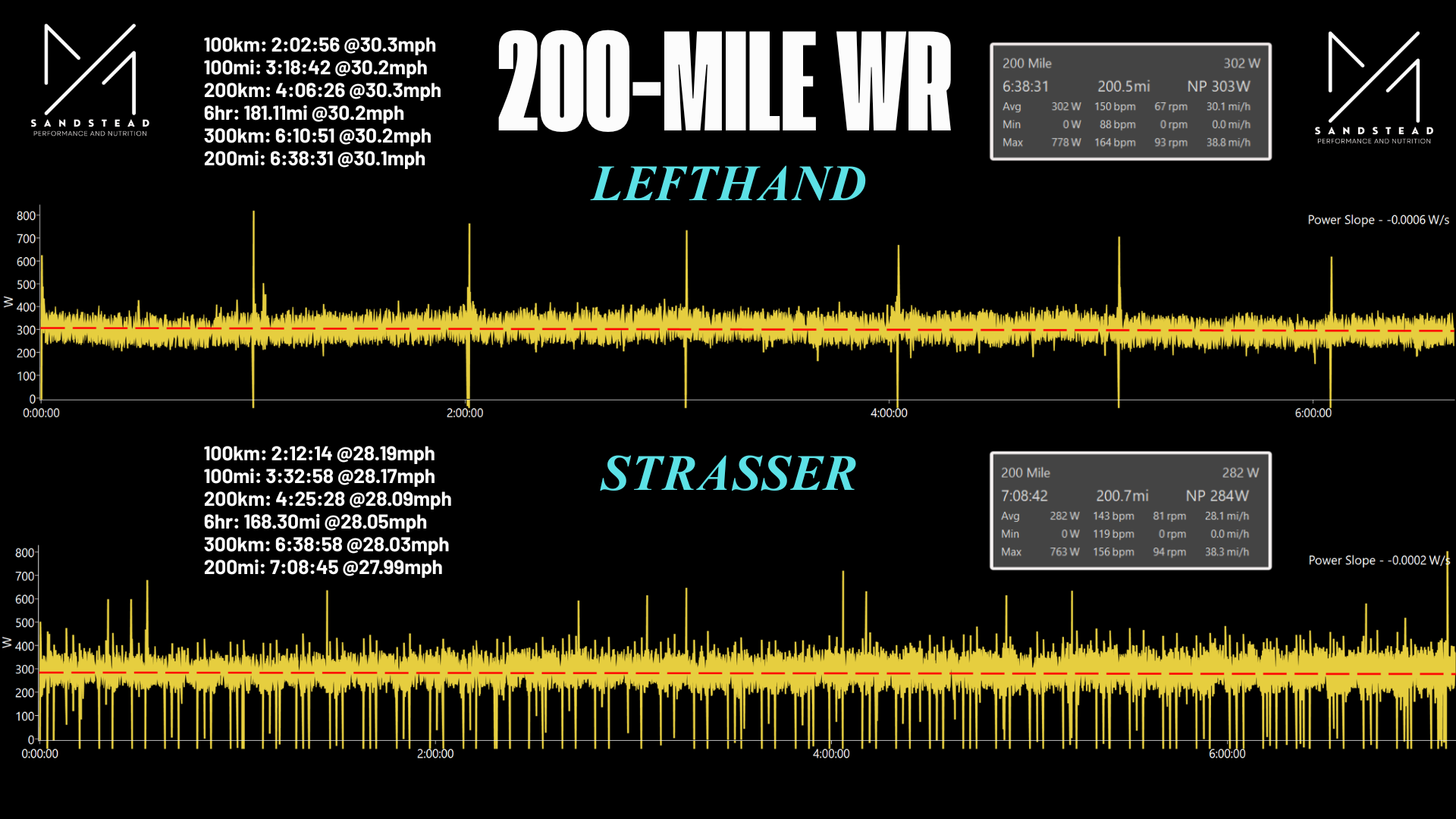
Matthew Lefthand (2026) versus Christoph Strasser (2021)
Matthew J. Lefthand has once again delivered some of the cleanest, most beautiful data the ultra cycling world has seen. His recent efforts in Colorado produced a set of pending records that deserve real attention. If you haven’t already, go check him out on Strava and give the man some love—these rides are worth studying.
Lefthand vs. Strasser: The 200-Mile Comparison
One of the clearest ways to understand the quality of Lefthand’s ride is to put his 200-mile effort side-by-side with Christoph Strasser’s data from the larger 24-hour world record. The contrast is instructive.
Strasser’s 24-hour performance remains one of the landmark rides in the sport. But when you isolate the embedded 200-mile segment, the picture becomes more complicated. The data suggests a classic “scooping” approach—pushing hard early or adjusting pace in a way that prioritizes stacking multiple records inside a single long effort rather than maximizing any one of them in isolation.
That strategy has become common in ultra time trials. Riders attempt the 24-hour record while simultaneously hunting the 100-mile, 200-mile, and other intermediate marks. The result is that almost every record ends up being a compromise. None of them fully represent what the athlete is capable of on a pure, focused effort for that specific distance.
Lefthand’s 200-mile ride still contains some scooping, but it is far more representative of what these records should look like. He chose a course that allowed a pure steady-state effort and then executed it with remarkable motor control. The power stays consistent. The pacing is disciplined. The quality is obvious.
Three Big Takeaways
1. Scooping dilutes the meaning of records. When an athlete tries to collect multiple records inside one ride, every mark becomes a negotiation. The 200-mile record suffers so the 24-hour total can improve, or vice versa. Lefthand’s approach is cleaner. It gives a more honest picture of what a strong ultra rider can actually sustain over that distance.
2. Motor control and course selection matter. Lefthand picked terrain that let him ride at a true steady state. That is not accidental. Quality in ultra cycling is not just about peak fitness on race day—it is about the training that produces the ability to hold an even, efficient effort for hours. His data shows that ability clearly.
3. The 24-hour record is vulnerable. Lefthand has the engine. He has shown he can choose a course that supports high-quality pacing. And he has the discipline to execute without unnecessary drama. Strasser’s 24-hour mark still stands, but the combination of power, course, and mental control Lefthand displayed suggests it will not stand forever.
A Great Day for Ultra Cycling
These are worthy pending records. The data is clean, the effort is honest, and the standard it sets is high. In a sport that sometimes prioritizes stacking numbers over pure performance, Lefthand’s Colorado rides feel like a return to quality.
Thank you, Matthew, for another reminder of what beautiful ultra data looks like. The rest of us now have a clear target.

template stuff
Training for the Race Across America (RAAM) is an epic journey. Discover how 2nd-overall finisher (2025) prepared for one of the most grueling ultra-endurance events in the world, requiring intense qualifications and unparalleled teamwork. From 24-hour races to the Race Across the East, see how dedication and strategic planning are key to success. Read about the emotional and rewarding experience of coaching an athlete toward achieving monumental goals.