
EVEN PACING FOR THE ULTRA CYCLIST
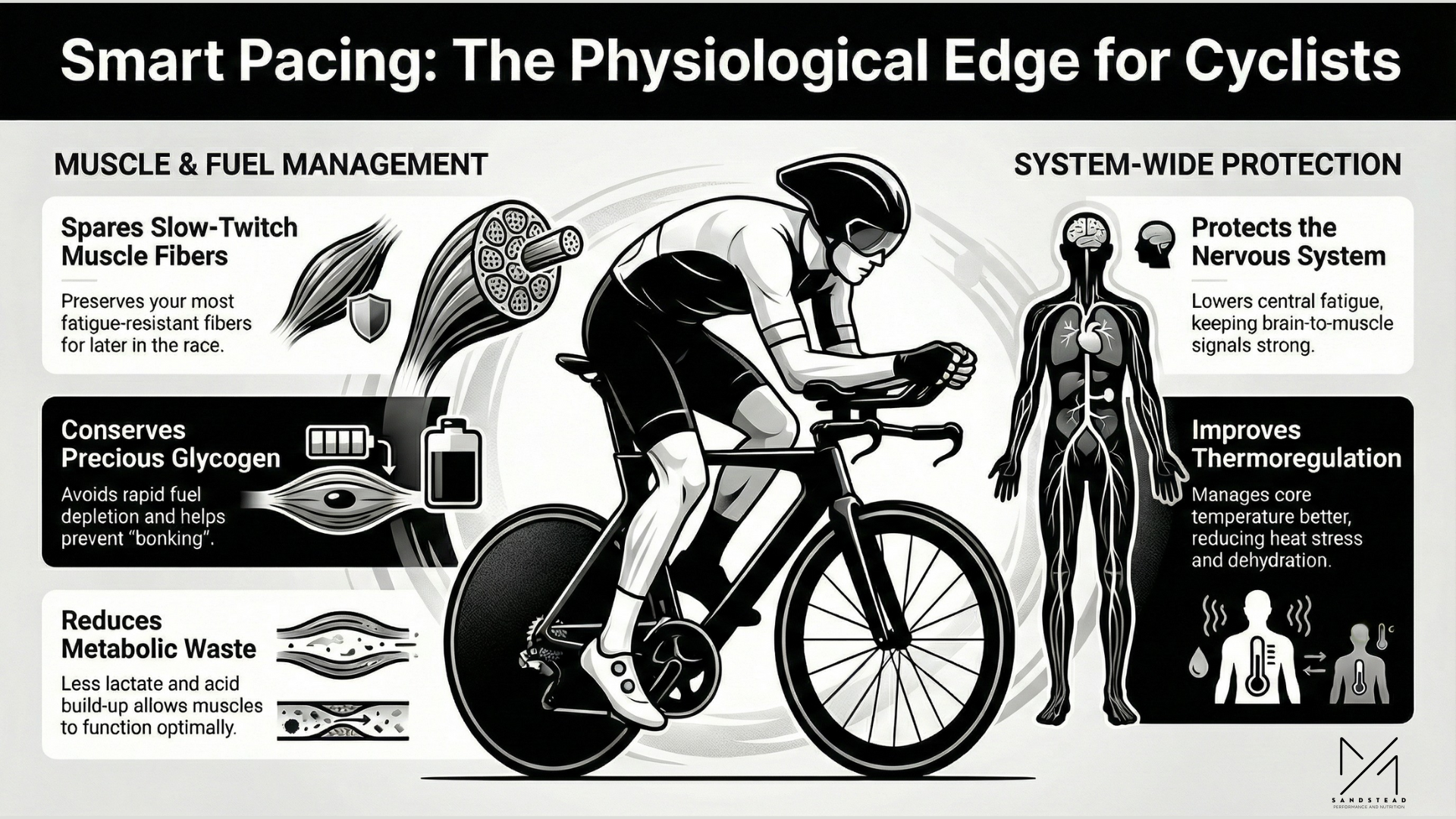
FIVE KEY PHYSIOLOGICAL ADVANTAGES OF “EVEN PACING” OR NEGATIVE SPLITS.
Why do I think so much about pacing when it comes to ULTRA cycling? If I ask an athlete to buy a $300 bottom bracket. Boom, it's done. No discussion and no educating on my part. If I tell them to fuel at 90 grams of CHO per hour. Boom. Done. Little to no education needed.
But...if I ask them to go easier than what they're used to at the start of an event with their friends flying off the front and laughing at them for going so slow...then there is tons of education and mental disciplining prior to the event.
So! Education! Just thinking of physiology, here are five physiological advantages that drive "even pacing" and "negative splits" during a closed circuit 24hr TT such as the upcoming Sebring event.
Spares Slow-Twitch (Type I) Muscle Fibers
Even pacing relies primarily on fatigue-resistant slow-twitch fibers for efficient, sustained aerobic work, while positive pacing forces early high-intensity recruitment of fast-twitch fibers and premature overload of slow-twitch ones, accelerating overall muscle fatigue.
Reduces Metabolic Waste
Even pacing maintains effort near lactate steady state to minimize blood lactate, acidosis, and metabolite accumulation, whereas positive pacing causes early and repeated surges above threshold that lead to greater cumulative metabolic stress and impaired muscle function over 24 hours.
Spares Glycogen
Even pacing promotes aerobic fat oxidation at sustainable intensities to conserve limited muscle and liver glycogen stores, while positive pacing’s aggressive early efforts drive rapid anaerobic glycolysis and disproportionate carbohydrate depletion, increasing the risk of premature bonking.
Protects the Nervous System (Reduces Central Fatigue)
Even pacing provides gradual, low-threat afferent feedback that allows the central nervous system to sustain consistent motor drive without aggressive protective downregulation, whereas positive pacing overwhelms the brain with intense early strain signals, triggering faster effort reductions, steeper RPE escalation, and deeper central inhibition
Improves Thermoregulation and Reduces Dehydration/Heat Stress Impact
Even pacing distributes metabolic heat production evenly to support consistent cooling and slower core temperature rise, cardiac drift, and dehydration, while positive pacing generates early heat and sweat surges that accelerate thermal and fluid stress, compounding late-race performance decay.

Training for the Race Across America (RAAM) is an epic journey. Discover how 2nd-overall finisher (2025) prepared for one of the most grueling ultra-endurance events in the world, requiring intense qualifications and unparalleled teamwork. From 24-hour races to the Race Across the East, see how dedication and strategic planning are key to success. Read about the emotional and rewarding experience of coaching an athlete toward achieving monumental goals.